Table Of Content
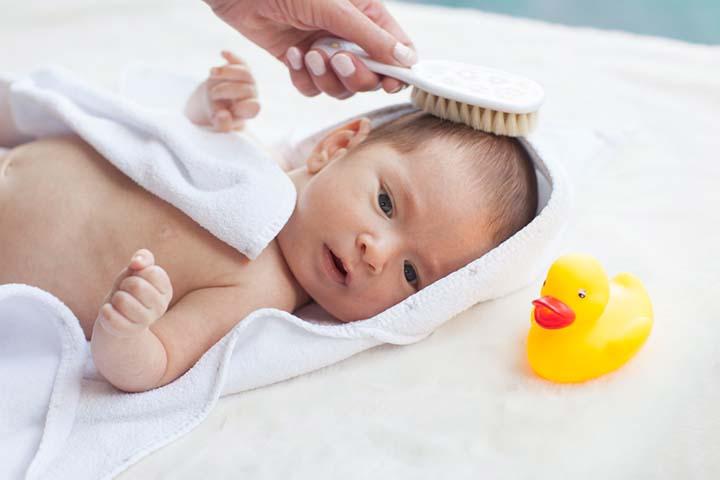
Even if your baby is totally bald when she’s born, the seeds of her future locks have long been planted. Hair follicles start to develop by week 14 or 15 of pregnancy, setting the stage for future strands to sprout. All of that said, if you have concerns about your baby’s skin, or it seems that their cradle cap may be getting infected, don’t hesitate to contact your pediatrician. For more details on the causes of cradle cap and how to treat and prevent it, click here. First of all, sometimes it can be hard to tell the difference between dry scalp and cradle cap.

Support Your Baby’s Head And Neck
In some cases, hair loss can be a symptom of too much vitamin A. If your child’s illness or injury is life-threatening, call 911. Babies shed hair all the time, so it’s not unusual for your four-week-old to have less on top than she did when she first came into the world. And even toddlers have been known to shed hair from time to time.
How to Care for Baby’s Hair Growth
Because ringworm is contagious, your child should be careful not to share any objects that touch the head such as hats, pillow cases, hair clippers, or brushes. Kids with this condition will have patchy areas of missing and broken hair. Some children eat the hair they pull and can develop big balls of undigested hair in their belly. Trichotillomania is a disorder in which kids compulsively pull out their hair.
BabyCenter is your parenting partner.
Is it okay to sprinkle baby powder on your hair as a dry shampoo? - Health shots
Is it okay to sprinkle baby powder on your hair as a dry shampoo?.
Posted: Tue, 05 Jul 2022 07:00:00 GMT [source]
There’s no set schedule, so it could happen right away after they come home from the hospital, or it could hold off until they’re rolling from their back to their tummy and sitting up on their own. Rebecca is a seasoned copywriter and researcher with over a decade of experience, specializing in parenting topics. With a passion for all aspects of raising children, from breastfeeding to potty training. “Massaging with oil can harm the development of the skull, which is still so soft and flexible” warns hair expert and cosmetologist Ghanima Abdullah.
Is it normal for my baby to lose their hair?
If you need help paying for a wig, contact an organization such as Locks of Love or Wigs for Kids for help. Doctors diagnose alopecia areata by examining your child’s scalp. They may remove a few hairs to examine under a microscope. Often, hair loss in children is caused by an infection or other problem with the scalp. Still, losing hair can take a toll on a child’s emotional well-being. Taking care of the way you handle your newborn's hair may also help prevent them from losing a large number of locks all at once.
Baby
Want to know more about how your baby grows during pregnancy? Take a look at this week-by-week breakdown of fetal development. This scalp infection spreads when kids share personal items such as combs and hats. It’s also known as ringworm of the scalp, although it’s caused by a fungus. "Constant rubbing against firm surfaces like crib mattresses as well as strollers and playpens may lead to those tiny hairs breaking and shedding," says Dr. Ball.
About BabyCenter
There are no guarantees, but in most cases a baby's hair loss is temporary. There's a good chance your child will sport a full head of hair within a year. This April marks Stress Awareness month in the US, a calendar moment designed to raise awareness of the pervasive and damaging nature of stress.
Harvard Health Publishing
While this discovery is certainly startling, baby hair loss is actually pretty common. So don't worry just yet — here's what you need to know about losing hair in infancy. Infant hair loss is not only common, it's a normal phase of early physical development. Some babies lose just a little bit of hair while others shed nearly every strand. Your baby may lose hair faster than others, making the shedding more noticeable. There's little cause for concern when it comes to any hair loss within the first 6 months of life.
The Characteristics Of Your Baby's Sleep
Kids with tinea capitis develop patches of hair loss with black dots where the hair’s broken off. Because hair loss may have a profound psychological effect on kids, it’s important to see a doctor for treatment. "Usually the cradle cap is not painful or itchy," says Dr. Ball. "The scales themselves don't usually cause hair loss, but the rubbing and hair washing in an attempt to remove the scales can lead to pulling out some strands of hair." Regardless of whether your newborn has a lot of hair or a little, you’ll want to take care of their scalp and tend to those wispy tresses. A full-term baby will typically lose their lanugo before birth, but some premature cuddle bugs will still have a thin layer for a few weeks after they are born.
Even if they start losing their hair at six months old, everything will likely be back to normal in another six months. When your little one’s hormone levels stabilize, their hair may be blonde even though it started out as brown. The end result depends on your baby’s genes and the new hormones they produce as they grow. While friction and pressure can speed up the shedding of hairs already in the resting phase of hair growth, these factors do not cause balding—the shedding hairs were “loose” to begin with. By 22 weeks, hair is visible on your baby's head – and may grow like a weed or only slightly by the end of pregnancy. In the weeks after hair starts growing, cells that produce melanin get to work and begin to add color to the strands.
This changes up their body chemistry, resulting in the loss of some or all of their hair. Bad hair days are a fact of life, so if your newbie nugget is born with some unruly strays (or none at all), don’t sweat it. Their hair will change and grow just as quickly as the rest of their little body. The newborn days go fast, so soak it all in and nuzzle that adorable mullet while you can.
While we know that stress is an undeniable factor in most people’s lives, its impact on so many aspects of our physical and mental health is perhaps more far reaching than we might imagine. The flakes you notice on their scalp appear quite dry and unpleasant, but they don’t bother your little one nor are they contagious. They usually appear during the first week after birth and can persist over the next few months, sometimes even after their 1st birthday. So your baby has less hair than your friend’s baby, or no hair at all.
Finding loose strands of baby hair can send a new parent into a spiral of worry. Explain to your child why the hair loss happened and how you plan to fix the problem. If it’s the result of a treatable disease, explain that their hair will grow back.
Wearing hair in tight braids or ponytails may also cause hair loss in some areas of the scalp. Around their first birthday or a little later, your baby will begin forming thicker terminal hairs. The oil produced by the scalp’s sebaceous glands interferes with their natural hair-shedding cycle, resulting in scaly patches, but this is easily treated.
But what surprises a lot of parents is that the new locks may look different than your baby’s first thatch of hair. It’s not uncommon, for example, for light hair to come in darker, straight hair to come in curly, or thick hair to come in thin — and vice versa. Genetics and your baby’s own hormones help determine which it will be. Most hair loss happens in the first 6 months of life, peaking at about 3 months, say the experts at Oregon Health and Science University.




No comments:
Post a Comment